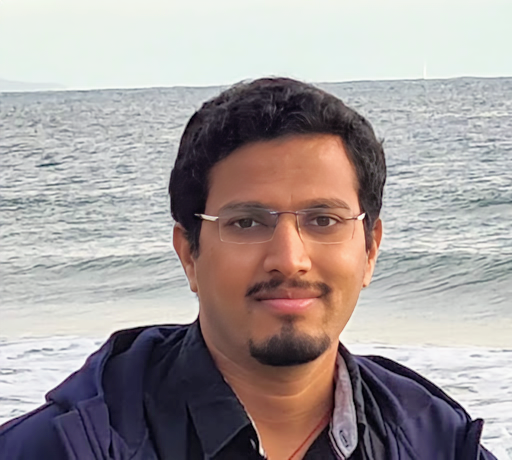
I am a Software Engineer specializing in Agentic Systems & LLM Platforms at Adobe (Santa Clara, CA) on the core engineering team building Adobe Brand Concierge (after earlier backend, runtime-operations, and scaling work on Adobe Journey Optimizer). Joining roughly a month after initial product ideation, I have helped take Brand Concierge from early prototypes through enterprise production deployments across semiconductors & hardware, enterprise SaaS, retail & e-commerce, travel & hospitality, and sports & entertainment—serving as Primary Contributor of its LLM evaluation & optimization platform and building core subsystems across the conversation runtime, grounded citation pipeline, guardrails, and ONNX retrieval services.
Previously, I earned my M.S. in Computer Science at UC Irvine (UCI NLP Lab with Dr. Sameer Singh), researching in-context learning, prompt robustness, and chain-of-thought reasoning in LLMs (published at NAACL 2024 and EMNLP 2022), following a B.Tech at IIT Kharagpur. Earlier, I built distributed telemetry microservices at TruckX, search and analytics systems at Adobe (2018–2021), and cloud performance models at Adobe Research, co-authoring granted US Patent US11086646B2.
Adobe Brand Concierge — Agentic Platform, Evaluation & Retrieval Systems
- Agent Evaluation & Optimization Platform (Primary Contributor): Built the end-to-end offline and online evaluation platform (FastAPI, durable MSSQL staged store scaling to 50k-answer datasets, Okta SSO), integrating GEPA reflective prompt & judge optimization, multi-judge correlation diagnostics, guardrail analysis, offline source-attribution calibration, and replay evaluation runners.
- Conversation & Agent Runtime Subsystems: Co-built the foundational conversation service from day one (FastAPI/MongoDB session & resource persistence, SSE streaming, A2A streaming client integration, tenant traffic/sandbox isolation, web-traffic analytics ingestion, and enterprise pilot integrations), and built declarative Pydantic/MCP tool schemas with pre/post hooks and configurable error-recovery policies, manifest-driven named LLM profile routing, document-first citation attribution, multi-layered preflight guardrails, and structured trace contracts in the successor PydanticAI runtime.
- CPU ONNX Retrieval & Reranking Infrastructure: Extended the CPU Text Embeddings Inference (TEI) / ONNX Runtime serving stack with INT8 quantization pipelines, custom E5 cross-encoder and two-stage embedding build targets, and a FastAPI multi-query batch reranking gateway.
Abstract & BibTeX
@inproceedings{mekala2024echoprompt,
  title={EchoPrompt: Instructing the Model to Rephrase Queries for Improved In-Context Learning},
  author={Mekala, Rajasekhar Reddy and Razeghi, Yasaman and Singh, Sameer},
  booktitle={Findings of the Association for Computational Linguistics: NAACL 2024},
  year={2024},
  url={https://arxiv.org/abs/2309.10687}
}
Abstract
- Agent Runtimes & Protocols: Multi-tenant orchestration, PydanticAI, MCP, declarative tool/hook policies, named LLM profile routing, and SSE streaming.
- Evaluation & Optimization: End-to-end LLM evaluation & optimization platform architecture, GEPA reflective prompt & judge optimization, multi-judge correlation, and replay diagnostics.
- Grounded Retrieval & Safety: Document-first citation attribution, preflight decision guardrails, cross-encoder rerankers, and INT8 CPU ONNX Runtime serving.
Experience
- Jun 2023–Present: Software Engineer — Agentic Systems & LLM Platforms (Adobe Brand Concierge & AJO), Adobe Inc. (Santa Clara, CA)
- Jul 2022–Jun 2023: Software Engineer, TruckX Inc. (Sunnyvale, CA)
- 2021–2023: Graduate Student Researcher & GTA, UC Irvine (UCI NLP Lab)
- 2018–2021: Software Engineer II, Adobe Inc. (Bangalore)
- Summer 2017: Research Intern, Adobe Research (BigData Experience Lab)
Education
- M.S. in Computer Science, UC Irvine (2021–2023) • GPA: 3.94/4.00
- B.Tech in Electrical Engg. (CS Minor), IIT Kharagpur (2014–2018) • GPA: 9.04/10.00
Selected Honors & Patent
- US Patent US11086646B2 (Cloud Performance Mitigation)
- Adobe Spot Award (2021) & Special Contribution Award (2020)
- Best Intern Project Award (2017), Adobe Research